
Total Connected Load: The Number That Decides Your Solar System Size in Dubai
Here is a conversation that happens more often than it should.
A business gets a solar proposal that looks super-attractive. The roof is huge, the solar array on the drawing is large, the projected savings are attractive, and everyone is pleased. Then the application goes to DEWA, and the permittable system turns out to be considerably smaller than the one that was quoted. The savings figures that justified the project no longer apply, and nobody is pleased.
The number that determines this is total connected load (TCL). If you are considering rooftop solar in Dubai, it is worth understanding what your TCL is, and what it means, before you look at a single proposal.
Note: this article covers systems connected under DEWA's Shams Dubai programme. Businesses in manufacturing, data centres or agri-tech may qualify for DEWA's D33 policy, which works on a different basis. More on that at the end.
What total connected load is
Total connected load, usually shortened to TCL, is the total electrical capacity your plot is authorised to draw, measured in kilowatts. It is a property of your building's electrical connection rather than of your consumption.
It is not the same as your actual usage. A facility can have a high connected load and modest consumption. TCL describes what the infrastructure is provisioned for, not what you use.
For solar, that distinction matters more than almost anything else.
Why it sets your system size
Under the Shams Dubai connection conditions, installed solar capacity cannot exceed the applicable share of your plot's total connected load. DEWA can also impose a lower threshold where there are technical limitations in integrating the system into the local distribution grid.
So the ceiling on your array is set by your electrical connection, not by how much roof you have.
The logic is a grid one. Your solar system feeds into a shared distribution network, and the network was planned around the connected loads it serves. A system sized without reference to that creates problems beyond your own building, which is why the constraint exists and why it is not negotiable at application stage.
The gap this creates on large roofs
The buildings most affected are precisely the ones that look most attractive for solar.
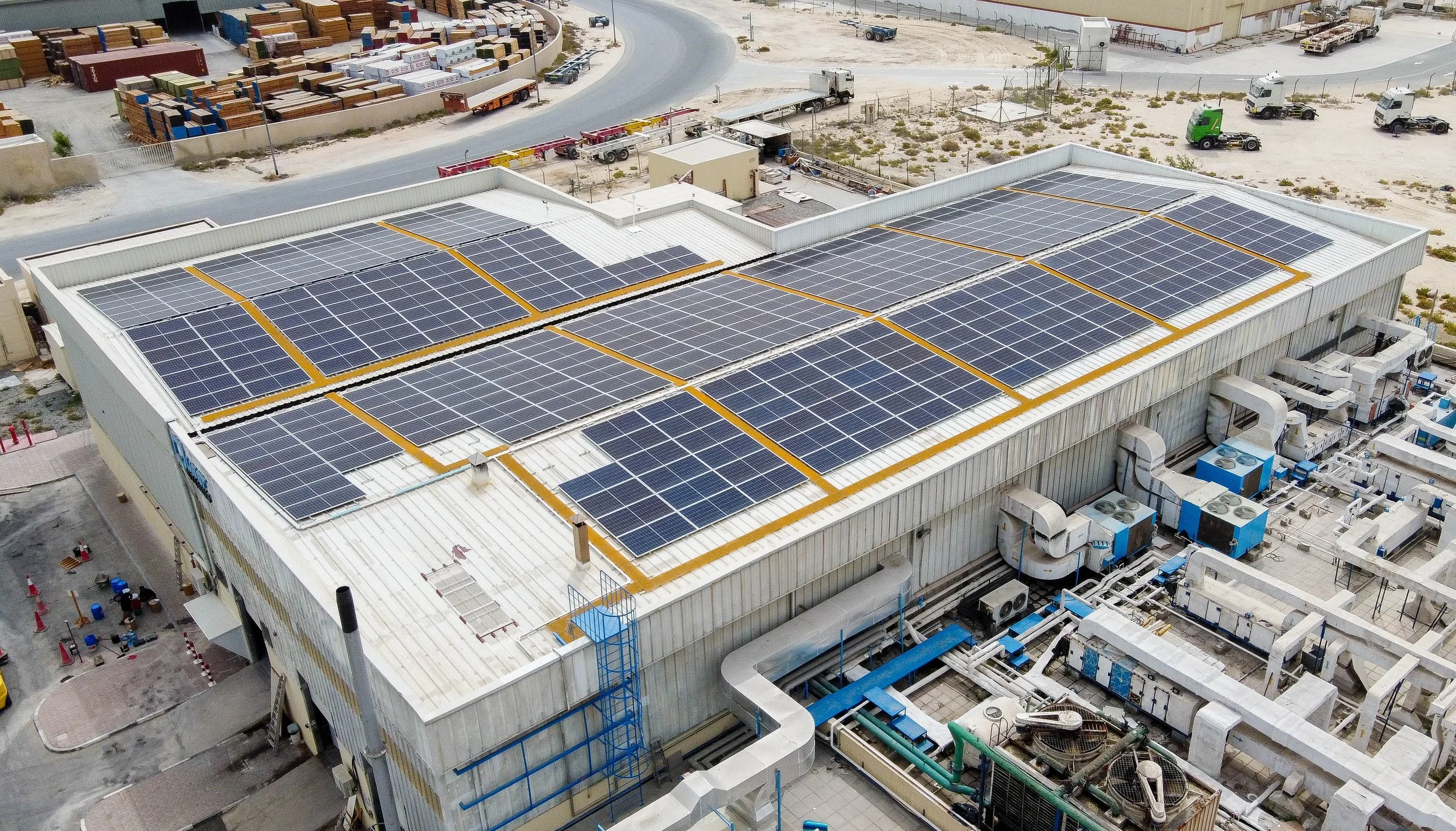
A large distribution warehouse, for example, may have an enormous unshaded roof and a relatively modest electrical connection, because the operation is lighting, ventilation, some materials handling and not much else. Roof area suggests a very large system. Connected load permits a much smaller one.
A manufacturing facility with heavy plant is frequently the reverse: a smaller roof but a substantial connected load, so the roof becomes the binding constraint rather than the regulation.
You cannot tell which you are from the outside, which is exactly why a proposal built from roof area alone is guesswork wearing a spreadsheet.
Where to find your TCL
Three places, in order of reliability:
Your latest approved DEWA design approval. This is the authoritative source and the one we ask for first.
Your facility's as-built electrical load schedules. These are part of the building's handover documentation.
Your single line diagrams (SLDs). The electrical schematic for the premises, usually held by facilities or by whoever maintains the switchgear.
If you cannot locate any of the three, that is common, particularly in leased units where documentation sat with a previous tenant. Contact us and we can help you track it down. It is a short task and it changes the accuracy of everything downstream.
What to do with the number
Once you have it, enter it into our solar calculator alongside your roof area and your average monthly DEWA bill.
The calculator is built to take TCL as an input for this reason. Most solar calculators do not ask for it, which is why most solar calculators produce a figure that cannot be permitted. Entering it gives you the constrained estimate from the start rather than the optimistic one you would otherwise have to revise downwards later.
Sizing against consumption, not against the ceiling
One more thing is worth mentioning, because the TCL ceiling is sometimes misread as a target.
Under Shams Dubai, electricity generated from solar would be used first, and any surplus is exported and credited against future consumption. Those credits offset future bills; they are not paid out. So a solar PV system sized to the maximum that your TCL permits, on a building whose consumption is well below that, simply generates credits you may never use.
The economically optimal system is usually matched to your actual consumption profile rather than to either your roof area or your connected load ceiling. Across the commercial systems we install under Shams Dubai, payback typically falls within four to seven years, after accounting for all costs including permitting fees and operations and maintenance expenses. Oversizing lengthens that, because the extra capacity produces credits rather than savings.
Three numbers, in other words, and the smallest of them sets your system: roof area, connected load, and consumption.
If you are in manufacturing, data centres or agri-tech
There is a second route, and the constraint above does not apply to it in the same way.
DEWA's D33 policy is open to businesses in those three industrial categories. It allows solar capacity far beyond the Shams Dubai share of connected load, up to the full total connected load of the plot. It values exported power on a feed-in tariff basis rather than as bill credits, and it permits ground-mounted systems, which Shams Dubai excludes. It requires a D33 certificate, and eligibility is determined by your activity rather than by choice.
If you are in one of those three categories, the Shams Dubai calculator will understate what you can install. Get in touch and we will model it properly. Our post on DEWA's D33 policy covers the details, including the relevant tariffs, the restrictions, and the differences between Shams Dubai and the D33 programme.
Getting it right from the start
Solaroofing has been waterproofing metal roofs in the UAE for over 30 years and designing and installing solar PV since 2019. We handle the approvals process end to end, including DEWA, DM, DDA, DIP, JAFZA, Trakhees and DCD, so the capacity question is established at feasibility rather than discovered at application.
Frequently Asked Questions
What is total connected load (TCL)? It is the total electrical capacity your plot is authorised to draw, measured in kilowatts. It is a property of your building's electrical connection rather than of how much electricity you actually consume, and under Shams Dubai it sets the ceiling on how much solar capacity you can install.
Why does total connected load limit my solar system size? Under the Shams Dubai connection conditions, installed solar capacity cannot exceed the applicable share of your plot's total connected load, and DEWA can apply a lower limit where local grid conditions require it. Your solar system feeds into a shared distribution network that was planned around the connected loads it serves, which is why the constraint exists and why it applies regardless of available roof area.
Where do I find my total connected load? On your latest approved DEWA design approval, which is the authoritative source, or on your facility's as-built electrical load schedules or single line diagrams. In leased units these documents sometimes sat with a previous tenant. If you cannot locate them, we can help you track the figure down.
Can I install solar across my whole roof if I have the space? Not under Shams Dubai unless your connected load permits it. Roof area determines physical fit, but the permittable system size is set by your connected load, and the economically sensible size is usually set by your consumption. Whichever of the three is smallest is the one that governs.
What happens if a proposal ignores total connected load? The quoted system will usually exceed what DEWA will permit, and the array has to be resized at application stage. That changes the generation figure, the savings figure and the payback calculation the project was approved on. Establishing TCL at feasibility avoids the revision.
Does total connected load limit D33 systems the same way? No. DEWA's D33 policy, open to businesses in manufacturing, data centres and agri-tech, allows capacity up to the full total connected load of the plot rather than a share of it, and also permits ground-mounted systems. It requires a D33 certificate and eligibility depends on your activity.
