
Industrial Skylights in the UAE: The Roof Element Everyone Forgets
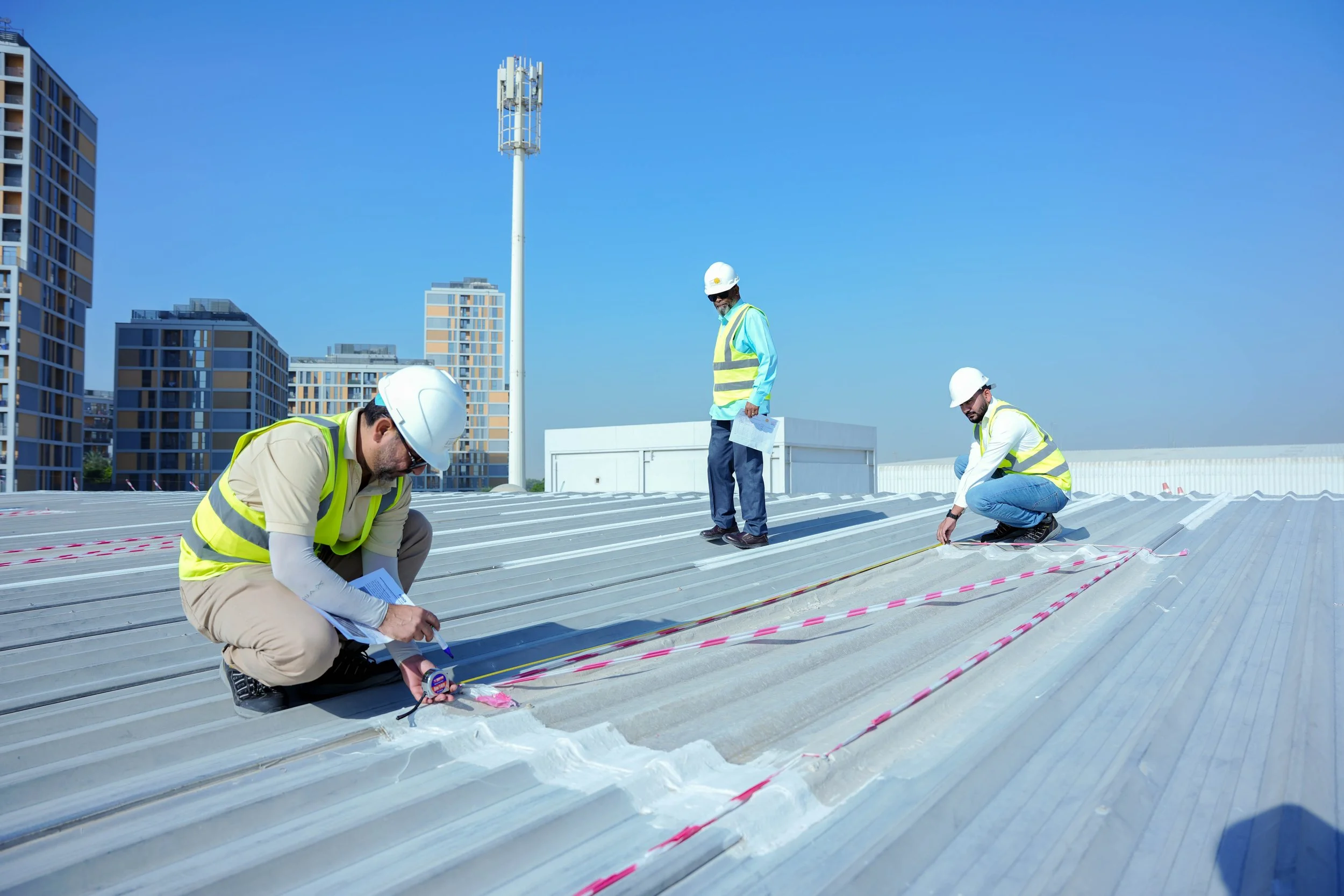
Skylights are the reason a lot of UAE warehouses have decent daytime lighting and a smaller electricity bill than they otherwise would.
They are, however, often the first part of the roof to fail.
A roof sheet is constructed of steel or aluminium. A skylight panel is plastic, usually GRP or polycarbonate, sitting in the same sun and often in the middle of large areas of metal roof sheets. It ages faster, moves differently, and its existence on a metal roof results in a junction between two materials that expand at different rates. On numerous industrial roofs we survey, the skylights are in visibly worse condition than the sheets around them.
They also carry a risk that the rest of the roof does not, which is worth covering first.
The safety issue nobody puts in the maintenance plan
A degraded skylight looks like a roof. It does not behave like one.
GRP and polycarbonate become brittle under prolonged UV exposure. A panel that supported weight when it was installed can lose that capability entirely while still looking broadly intact from above, particularly once dust has dulled the surface and the panel and the sheets look similar underfoot.
Falls through fragile roof lights are a recognised cause of serious injury in industrial buildings worldwide, and the mechanism is always the same: someone accessing the roof for an unrelated reason steps onto or near a panel that will no longer take the load.
Two practical consequences for any facility with an ageing roof:
Anyone accessing the roof needs to know where the skylights are and that they are not to be walked on, regardless of appearance. That includes AC contractors, solar installers, telecoms engineers and anyone else who goes up there for reasons unconnected with the roof.
Degraded panels should be treated as a hazard, not a maintenance backlog item. If a survey identifies brittle roof lights, that finding belongs in your risk assessment rather than in next year's budget discussion.
How skylights actually fail
Three distinct failure modes, and they need different answers.
The panel itself degrades. UV exposure yellows and embrittles the material over years. The panel loses light transmission, which quietly erodes the reason it was installed, and loses impact resistance, which creates the safety issue above. Eventually it cracks, often radiating from the fixing points where stress concentrates.
The perimeter flashing fails. This is the most common source of skylight leaks. The junction between a plastic panel and a steel roof sheet is a joint between two materials with different thermal expansion rates, sitting in a climate that cycles them hard every day. Sealant at that junction works loose earlier than sealant between two steel sheets, because the differential movement is greater.
The fixations fail. Fasteners through a brittle panel crack the material around them. Once water can enter at a fixing, it runs under the panel and into the building, and the visible wet patch inside can be some distance from the actual entry point.
Seal or replace?
The honest answer depends on the panel, and it is one of the more clear-cut decisions on a roof.
Sealing is appropriate where the panel itself is sound and the problem is at the perimeter or the fixings. This is common on roofs in the ten to fifteen year range, where the flashing has failed but the roof lights still transmit light properly. Treating the perimeter junction and the fixings with an elastomeric sealant that accommodates the differential movement addresses the leak without disturbing the panel.
Replacement is the right call where the panel has gone brittle, yellowed significantly, or cracked. There is no treatment that restores flexibility or light transmission to a degraded plastic panel, and sealing around a panel that will not take weight leaves the safety problem exactly where it was. On roofs beyond the fifteen to twenty year mark, replacement is usually the honest recommendation.
A survey should tell you which of these applies to each panel rather than giving a blanket answer for the roof. It is common to find both on the same building, particularly where roof lights have been replaced piecemeal over the years.
Doing it at the right time
Skylight work is considerably cheaper as part of a wider roof project than as a standalone job, for straightforward reasons: access, scaffolding or safety systems, permits and mobilisation are already in place.
Three moments worth aligning it with:
During a waterproofing or restoration project. The roof team is already up there with access arranged. Skylight perimeters are treated as one of the critical areas of the roof in any properly specified waterproofing system, so the flashing work happens anyway. Adding panel replacement at that point is marginal cost rather than a new project.
Before installing rooftop solar. Once an array is in place, access to roof lights near or under the panel layout becomes awkward and expensive. Any skylight approaching end of life should be replaced before the solar design is fixed, not after.
Before the rain season, not during it. Standard advice, routinely ignored, and skylight perimeters are among the first things to show it.
What we do
Skylight and roof light perimeters are one of the named critical areas treated in every TOPPS® waterproofing system we apply, alongside seams, sidelaps, fasteners, flashings, penetrations and gutters. Where panels have degraded beyond sealing, we replace them as part of the restoration works.
Solaroofing has worked exclusively on metal roofs in the UAE since 1994, for clients including the UAE Ministry of Defence, Dubai Police, Dubai Civil Aviation Authority and Drydocks World, alongside factories and warehouses across Jebel Ali and Dubai's industrial areas.
If your roof lights are yellowing, cracking, or leaking at the edges, a survey will tell you which panels need replacing and which can be sealed. It is free, and the report is yours to keep.
Frequently Asked Questions
Why do skylights leak more than the rest of the roof? Because the perimeter is a junction between two materials that expand at different rates. A plastic roof light and a steel roof sheet move by different amounts through the daily temperature cycle, so sealant at that junction is worked harder than sealant between two steel sheets and fails earlier.
Can a cracked skylight be repaired, or does it need replacing? A cracked panel needs replacing. Cracking indicates the material has become brittle through UV exposure, and no surface treatment restores flexibility or load-bearing capability. Sealing is appropriate where the panel is still sound and the leak is at the perimeter or the fixings.
How long do skylights last in the UAE? Service life varies with the material and the specific product, but UV exposure here is severe and roof lights consistently degrade faster than the metal sheets around them. On roofs beyond fifteen to twenty years, it is common to find panels that have lost significant light transmission and are no longer safe to bear weight.
Are old skylights a safety risk? Yes. Degraded GRP and polycarbonate panels can look intact. Falls through fragile roof lights are a recognised cause of serious injury. Anyone accessing the roof, including contractors there for unrelated work, should be told where roof lights are and that they must not be walked on.
Should skylights be replaced before installing solar panels? If they are approaching end of life, yes. Once an array is installed, access to roof lights near or beneath the panel layout becomes difficult and expensive, so replacing them beforehand is significantly cheaper than doing it later.
Is skylight work included in a roof waterproofing project? Skylight perimeters are treated as one of the critical areas in a properly specified waterproofing system, so the flashing work is included. Replacement of degraded panels is priced separately but is far cheaper carried out alongside a roof project than as a standalone job, because access and mobilisation are already in place.
