
Is Your Warehouse Roof Ready for the Rain Season?
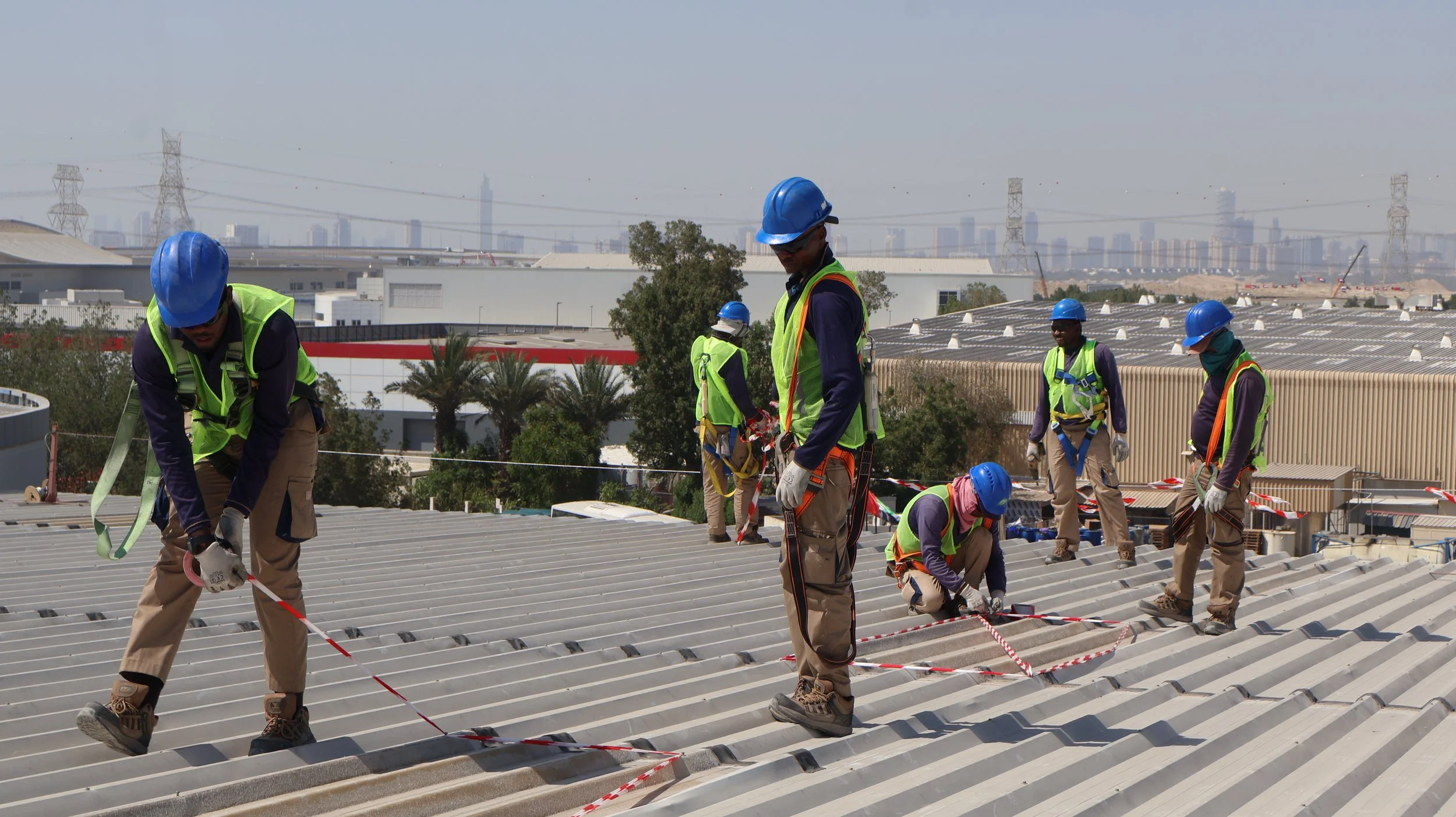
The UAE's rain arrives in a handful of events between roughly November and April, and that is precisely what makes it a cause for concern for facilities with metal roofs in the UAE.
Low annual rainfall is why roof maintenance slips down the priority list during dry periods throughout the year. Facilities that have gone years without a problem can discover several issues with their roofs in a single afternoon.
If you are reading this before the rainy season, you are in the right window. Here is what to check, in the order that matters.
Why the window is narrower than it looks
Two things compress the time available.
Restoration needs dry conditions. Sealant removal, cleaning, corrosion treatment and coating application all require a dry roof and dry weather to cure properly. Once the rain starts, remedial work becomes a matter of waiting for gaps between events.
Contractor availability collapses after the first rain. The week after the first significant rainfall, every roofing contractor in the Emirates is answering emergency calls. Work that could have been scheduled calmly in October becomes a queue in December.
The practical deadline for planned work is therefore earlier than the first rain, not at it.
The pre-season checklist
1. Clear the gutters, properly
This is the highest-value item on the list and the most frequently done badly.
Clearing means the full length of every run, not just the accessible stretches near the outlets. Sand and dust accumulate continuously here rather than seasonally, and a gutter can hold a substantial compacted bed along its length while looking clear at the ends.
Then check each outlet actually flows, because blockages frequently sit in the downpipe below the visible opening.
The reason this sits first: a gutter over capacity sends water backwards into the building beneath the roof sheets, and the roof itself can be in perfect condition while it happens.
2. Inspect underneath the debris
Once a gutter is cleared, look at what the debris was sitting on.
Damp sand held against steel for years is a corrosion cell, and it is common to find thinning or perforation in the gutter itself once the material is removed. Clearing a long-neglected gutter and walking away without inspecting it means you have removed the blockage and left the hole.
3. Look at the skylights
Roof lights degrade faster than the sheets around them, and the perimeter flashing sits at a junction between two materials that expand at different rates, so sealant there fails earlier.
Treat degraded panels as a safety matter rather than a maintenance one. Anyone going onto the roof for any reason, including contractors there for unrelated work, should know where the roof lights are and that they must not be walked on.
4. Check every roof penetration
AC units, extract fans, cable entries, pipe stacks. Anything cut into the roof after the original build, because retrofit penetrations are usually the least carefully detailed part of the structure.
If any rooftop work has been done this year, by anyone, check these specifically. New penetrations and disturbed flashings are the most common source of a first-rain leak.
5. Walk the seams and fasteners
A systematic look at seams, sidelaps and fixings across the whole roof. You are looking for cracked or lifted sealant, backed-out screws and split washers.
Systematic is the key word. A spot check around last year's problem area tells you nothing about the rest of the roof, and on a roof where every seam is the same age, they are all at a similar point in their life.
6. Clear the roof of everything else
Off-cuts, packaging, fixings, tools and general debris left behind by any trade that has been up there. A single dropped item can block an outlet completely, and it tends to be found by the first heavy rain rather than by anyone looking.
7. Check inside
Walk the building and look at the underside of the deck and the purlins. Staining and rust trails record where water has been travelling, often from a previous season nobody reported. These marks show direction, and they frequently identify an entry point some distance from where the drip appeared.
If the roof needs more than maintenance
A pre-season check sometimes finds that the roof needs restoration rather than clearing: sealant failed across most seams, widespread corrosion, a coating at the end of its life.
If that is where you are, the decision is whether to do it now or carry the risk through to spring. That is a genuine judgement call and it depends on what the building holds and what a flood would cost you. What is not a judgement call is doing nothing. Act before it is too late.
Either way, know before the rain rather than after.
Booking a check
Solaroofing has been waterproofing metal roofs in the UAE for over 30 years, for clients including the UAE Ministry of Defence, Dubai Police, Dubai Civil Aviation Authority and Drydocks World, alongside factories and warehouses across Jebel Ali, Dubai Investments Park, National Industries Park, Dubai Industrial City, Al Quoz Industrial Area, Musaffah, ICAD and numerous other industrial areas within the UAE.
Our surveys are free and the report is yours to keep. If the honest answer is that your roof needs nothing this season, that is what the report will say.
Frequently Asked Questions
When should I prepare my warehouse roof for the rain season in the UAE? Before the first rainfall rather than at it. Restoration and sealing work need dry conditions to be applied and cured properly, and contractor availability tightens considerably once emergency calls start after the first significant rain. October is a sensible target for planned work, with gutter clearance and penetration checks completed before November.
How often should an industrial roof be inspected in the UAE? Twice a year suits most facilities, once before the rain season and once after, plus a check following any major storm. Roofs carrying solar arrays, rooftop plant or regular foot traffic warrant more frequent attention, as does any roof where other trades have been working.
What is the most common cause of warehouse flooding during UAE rain? Drainage rather than the roof itself. When a gutter exceeds capacity, water rises above the level of the roof sheet ends and flows backwards into the building beneath the sheets. Every seam and fastener on the roof can be in perfect condition while this happens, which is why gutter clearance is the single highest-value pre-season task.
Can roof waterproofing be carried out during the rain season? Emergency sealing can be done in dry windows between events, but planned restoration should not be. Sealant removal, cleaning, corrosion treatment and coating application all need a dry substrate and dry weather to cure, so work carried out in marginal conditions does not perform as it should.
We had contractors on the roof this year. Does that change anything? It is worth a specific check. Disturbed flashings, new penetrations and debris left behind are among the most common causes of a first-rain leak, and the building owner usually finds out about them before the contractor does.
Does a pre-season check disrupt operations? No. The external inspection is carried out entirely from the roof, and the internal element is a short walk through the building to look at the underside of the deck and the purlins. Nothing needs to stop.
